장산은 단순한 산이 아니다.
그곳은 지질학적 기원과 전설 속 장산국, 한국전쟁의 비극,
그리고 오늘날 시민들의 신앙과 삶이 한데 교차하는 사유의 공간이다.
거대한 화산의 흔적은 인간의 시간을 훨씬 넘어선 자연의 장구한 역사를 보여주고,
장산국의 전설은 공동체의 오랜 기억과 정체성을 대변하며,
한국전쟁의 아픔은 인간의 폭력성과 비극을 생생히 증언한다.
그리하여 오늘날 장산을 오르는 발걸음은 단순한 등산이 아니라 역사와 신앙,
자연과 인간의 관계를 묵상하는 호젓한 순례가 된다.
1. 고대 왕국의 숨결
오랜 신앙의 벗 요셉 형제와 함께 장산의 거친 너덜길을 걸으며,
나는 발밑의 바위들 속에 묻혀 있을 아득한 고대의 역사를 떠올렸다.
지금은 해운대의 진산(鎭山)으로 널리 사랑받는 장산이지만,
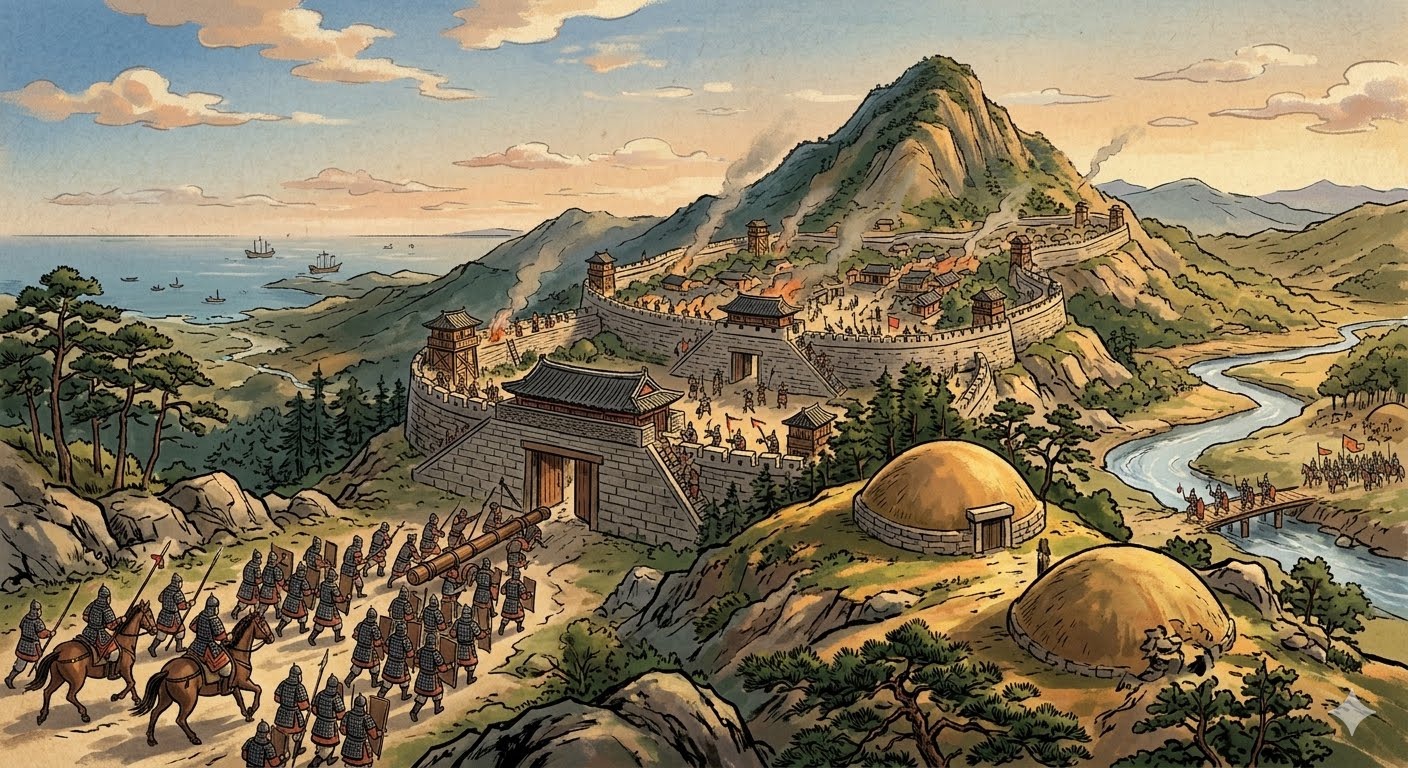
기원 전후 삼한 시대에는 독립된 씨족 국가인 장산국의 터전이었다.
‘거칠산국’, ‘내산국’ 등 다양한 이름으로 불렸던 이 작은 왕국은
인구가 그리 많지 않은 소규모 부족 연합체였다고 전해진다.
조선 시대 고지도 40여 점에 뚜렷이 기록된 ‘고장산국(古萇山國)’이라는 글귀는,
이곳이 단순한 전설이 아닌 엄연히 실존했던 역사의 현장이었음을 묵묵히 증언한다.
2. 신성과 인성의 결합, 마고당의 기억
장산국의 건국 설화는 하늘의 신성과 지상의 인성이 결합하는 신비로운 이야기다.
하늘에서 내려온 신선이 지상의 여인 고선옥과 결혼해 스무 명의 자녀를 낳았고,
그들이 각 마을의 씨족장이 되었다고 한다.
훗날 신선이 홀연히 하늘로 돌아간 뒤 홀로 남은 고선옥이 부족을 다스렸다는 전설은,
장산국이 초기 모계 중심의 평등 사회였음을 암시한다.
후대 사람들은 그녀를 ‘마고할미’로 모시며 장산에 마고당을 세워 마을의 안녕을 빌었다.
이처럼 장산은 오래전부터 하늘과 땅이 만나는 가장 거룩한 기도처였다.
3. 권력의 덧없음과 왕국의 몰락
신라와 가야라는 거대한 세력의 틈바구니 속에서, 장산국은 생존을 위한 찬란한 흔적들을 부산 전역에 새겨놓았다.
동래 복천동 고분군에서 쏟아져 나온 서슬 퍼런 철제 갑옷과 무기들은 초기 장산국의 강력했던 철기 문화를 대변하고,
순우리말 이름인 '거칠산국'의 진짜 고향인 황령산(荒嶺山)은 나라의 웅장한 이름이 시작된 시원의 공간이었다.
이후 세력이 밀려나며 궁궐과 왕릉을 깊은 산 속에 숨겨야 했을 때,
그들은 온천천 남쪽 배산(盃山) 능선을 따라 거대한 봉토분(연산동 고분군)을 세우고 배산성을 쌓으며 마지막까지 독자적인 권력을 지키려 저항했을 것이다.
해운대 좌동 약수암 옆에 전해 내려오는 ‘오릉(五陵)’ 전설 역시 그 처연한 망국의 슬픈 흔적이다.
그러나 《삼국사기》에 따르면,
신라 탈해왕 시절 거도 장군은 ‘마숙(馬叔)’이라는 말놀이로 장산국 전사들을 방심하게 한 뒤 기습하여 이 작은 낙원을 최종적으로 병합해 버렸다.
한때 황령산의 정기를 받아 복천동과 배산에 거대한 고분군을 남기며 해상 무역을 호령했던 소국(小國)의 운명은,
책략과 무력 앞에 이토록 허망하게 무너졌다.
세상의 권력과 힘이 얼마나 덧없는 것인지를 시공을 초월해 일깨워준다.
"장산은 실존의 산, 기억의 산, 은총의 산이다."
그 길을 걷는다는 것은 단순한 육체적 이동이 아니다.
역사와 신앙, 자연과 인간의 관계를 끊임없이 묵상하는 사유의 순례다.
“Cogito, ergo sum (나는 사유한다, 고로 존재한다).”
데카르트의 말처럼, 장산을 오르며 끊임없이 생각에 잠기는 나의 발걸음은
곧 내가 살아있음을 확인하는 가장 엄숙한 존재의 고백이 된다.
발걸음의 기록
2천 년 전 사라진 장산국의 숨결이 살아 숨 쉬는 장산 너덜바위를 30년 지기 형제님과 함께 직접 걸었던 생생한 도보 기록,
장산 거친 돌강 위에서 실존을 묻다
1. 거친 돌강 위에서 실존을 묻다 주일 미사와 평일 미사 참례를 위해 매일같이 디디는 광안성당 마당과 수영 장대골 순교성지.우리 집 앞마당처럼 익숙하고 평온한 그곳을 벗어나, 오늘은 오랜
cogiter.tistory.com
Jangsan is not merely a mountain.
It is a space of contemplation where geological origins, the legendary Jangsan-guk, the tragedy of the Korean War, and the faith and lives of today's citizens intersect. The remnants of a massive volcano reveal a grand history of nature that far exceeds human time; the legends of Jangsan-guk represent the long-standing memory and identity of the community; and the pain of the Korean War vividly witnesses human violence and tragedy. Thus, the footsteps ascending Jangsan today are not a simple hike, but a serene pilgrimage meditating on history and faith, and the relationship between nature and humanity.
The Breath of an Ancient Kingdom
Walking along the rugged boulder-strewn paths (Neodeolgill) of Jangsan with Brother Joseph, a companion of my long-held faith, I recalled the distant ancient history that must be buried beneath the rocks at my feet. Though Jangsan is now widely loved as the guardian mountain (Jinsan) of Haeundae, it was the cradle of Jangsan-guk, an independent clan-based state, during the Samhan period around the beginning of the Common Era. This small kingdom, referred to by various names such as ‘Geochilsan-guk’ and ‘Naesan-guk’, is said to have been a small-scale tribal confederacy with a small population. The words ‘Go-Jangsan-guk’ (Ancient Jangsan-guk), clearly recorded in about forty Joseon Dynasty antique maps, silently witness that this place was a real historical site, not a mere legend
The Union of Divinity and Humanity: Memories of Magodang
The foundation myth of Jangsan-guk is a mysterious tale of the union between heavenly divinity and earthly humanity. It is said that a Taoist immortal who descended from heaven married an earthly woman, Go Seon-ok, and fathered twenty children who became the clan chieftains of each village. The legend that Go Seon-ok ruled the tribe alone after the immortal suddenly returned to heaven hints that Jangsan-guk was an egalitarian, matriarchal society in its early stages. Later generations enshrined her as ‘Mago-halmi’ (Grandmother Mago) and built Magodang Shrine on Jangsan to pray for the peace of the village. As such, Jangsan has long been the most sacred place of prayer where heaven and earth meet.
The Futility of Power and the Fall of the Kingdom
Caught in the middle of giant powers like Silla and Gaya, Jangsan-guk must have had to hide its palaces and royal tombs deep in the mountains. The legend of ‘Oureung’ (Five Tombs), handed down beside Yaksuam Hermitage in Jwa-dong, Haeundae, is a sorrowful trace of that desperate survival. Yet, according to Samguk Sagi (History of the Three Kingdoms), during the reign of King Talhae of Silla, General Geodo caught the warriors of Jangsan-guk off guard with a horse-playing tactic called ‘Masuk’ and launched a surprise attack to annex this small paradise. The fate of the small nation, helplessly collapsed before stratagem and armed force, reminds us across time and space how futile worldly power and might truly are.
Jangsan is a mountain of existence, a mountain of memory, and a mountain of grace.
Walking that path is not a mere physical movement. It is a pilgrimage of thought, constantly meditating on history and faith, and the relationship between nature and humanity.
“Cogito, ergo sum.” As Descartes said, my footsteps constantly lost in thought while climbing Jangsan become a solemn confession of existence, confirming that I am alive.
Jangsan Is No Ordinary Mountain
Jangsan is not merely a mountain. It is a space of contemplation where geological origins, the legendary kingdom of Jangsan, the tragedy of the Korean War, and the faith and lives of today’s citizens intersect. The traces of a colossal volcano reveal a natural history far longer than human time. The legend of Jangsan-guk embodies the enduring memory and identity of a community. The sorrow of the Korean War bears witness to human violence and tragedy. Thus, to climb Jangsan today is not simply to hike, but to embark on a quiet pilgrimage—reflecting on history and faith, nature and humanity.
Breath of an Ancient Kingdom
Walking the rugged stone riverbed of Jangsan with my long-time companion in faith, Brother Joseph, I thought of the ancient history buried beneath these rocks. Now beloved as the guardian mountain of Haeundae, Jangsan was once, around the turn of the Common Era, the seat of an independent clan-state known as Jangsan-guk. Called by various names—“Geochilsan-guk,” “Naesan-guk”—this small kingdom was a modest tribal confederation with only a few hundred people. The inscription “Old Jangsan-guk” found clearly on more than forty Joseon-era maps silently testifies that this was not mere legend, but a genuine site of history.
Union of Heaven and Earth, Memory of Mago-dang
The founding myth of Jangsan-guk tells of a mysterious union between heaven and earth. A celestial immortal descended and married a woman of the earth, Go Seon-ok, and together they bore twenty children, who became clan leaders across the land. When the immortal returned suddenly to heaven, Go Seon-ok ruled alone. This legend suggests that Jangsan-guk was an early matrilineal, egalitarian society. Later generations revered her as “Mago Grandmother,” building the Mago Shrine on Jangsan to pray for the village’s peace. Thus Jangsan has long been a sacred place where heaven and earth meet.
The Futility of Power and the Fall of a Kingdom
Caught between the great powers of Silla and Gaya, Jangsan-guk left traces of its struggle for survival across Busan. The iron armor and weapons unearthed at the Bokcheon-dong tombs testify to its strong iron culture. The name “Geochilsan-guk,” rooted in the native Korean tongue, points to Hwangnyeong Mountain as the cradle of its identity. As its power waned, the kingdom hid palaces and tombs deep in the mountains, raising massive burial mounds along the Baesan ridge and fortifying Baesan Fortress to resist to the end. The legend of the “Five Tombs” near Yak-su Hermitage in Jwa-dong is a poignant remnant of this lost kingdom. Yet according to the Samguk Sagi, during King Talhae’s reign, General Geodo of Silla deceived Jangsan-guk’s warriors with years of horse-racing games called “Masuk,” then struck suddenly, annexing this small paradise. Once a maritime power leaving grand tomb clusters at Bokcheon-dong and Baesan, the little kingdom fell helplessly to stratagem and force. Its fate reminds us across time that worldly power and might are fleeting illusions.
Conclusion: Jangsan’s Philosophical Resonance
“Jangsan is a mountain of existence, of memory, of grace.” To walk its paths is not mere physical movement, but a pilgrimage of reflection on history, faith, nature, and humanity. “Cogito, ergo sum—I think, therefore I am.” As Descartes said, each step I take in contemplation upon Jangsan becomes the most solemn confession of existence: a living affirmation that I am here, thinking, and alive.
'Echoes of Thought' 카테고리의 다른 글
| 공부 안 한 놈은 백지를 내는 게 정답이다 (0) | 2026.06.15 |
|---|---|
| 우리 장모님이 세상에서 가장 멋진 이유 (0) | 2026.06.15 |
| 장산 거친 돌강 위에서 실존을 묻다 (4) | 2026.06.14 |
| 광안성당과 장대골 - 골목길에 피어난 보편적 양심의 가락(26-15) (1) | 2026.06.13 |
| 사유의 기록: 빛의 신비 속에 흘러간 신앙의 시작(26-14) (1) | 2026.06.13 |